


The lion may be the most famous member of the Big Five, but the leopard is often considered the most elusive and fascinating predator in the Kruger National Park.
Elegant, intelligent, and incredibly stealthy, the leopard is one of the most sought-after sightings during a Kruger safari. Unlike lions, which often rest openly in the road or grasslands, leopards prefer secrecy and solitude, making every sighting feel truly special.
Hidden high in the branches of a tree or perfectly camouflaged in dense bushveld, leopards are masters of stealth and survival.
The leopard combines beauty, strength, and intelligence, making it one of Africa’s most admired predators.
Because leopards are primarily nocturnal and naturally cautious, spotting one in the wild requires patience, sharp observation, and a bit of luck. Fortunately, experienced guides on guided Kruger National Park safaris know the best areas to improve your chances of seeing these incredible animals.

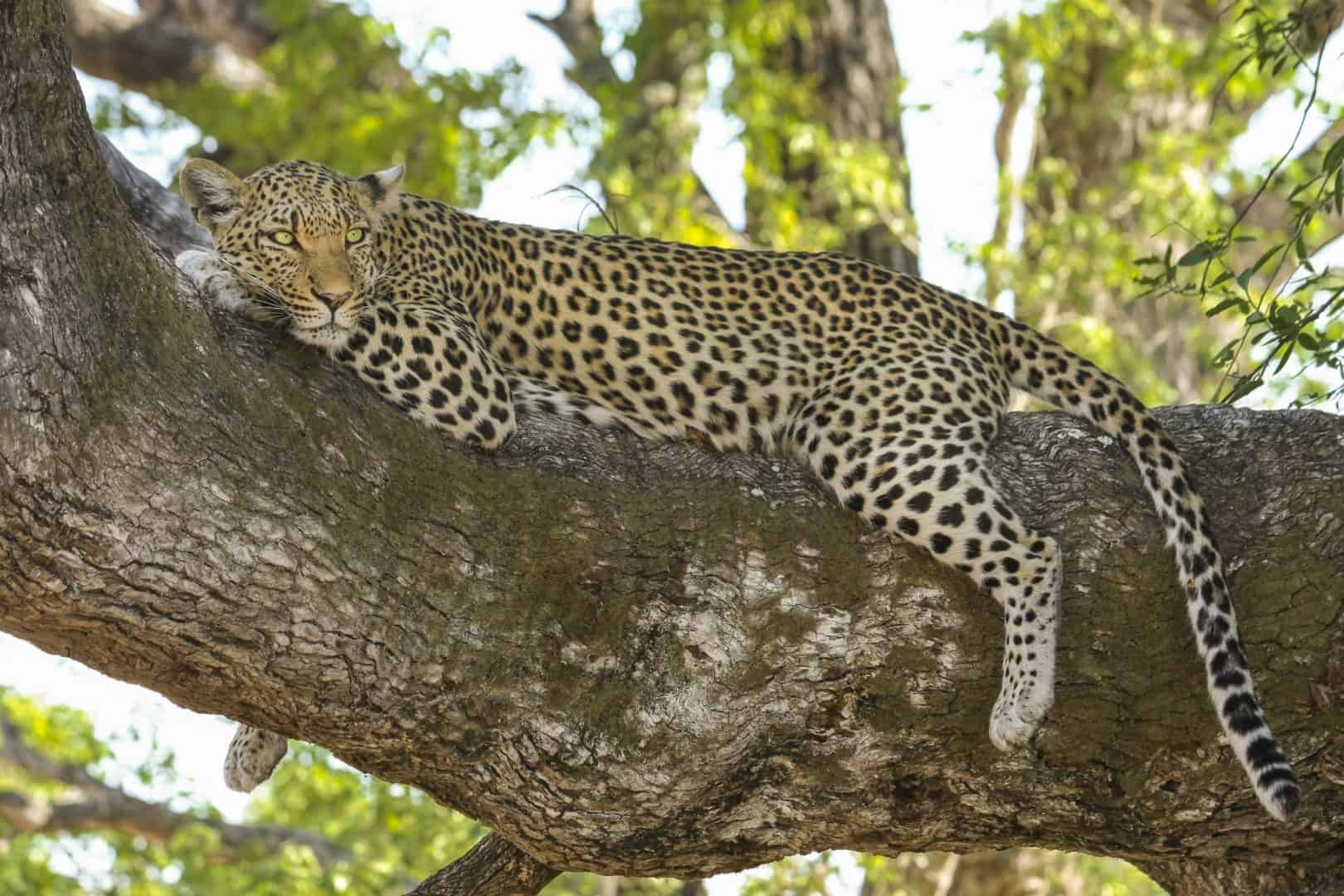
The Leopard: Africa’s Ultimate Ambush Predator
Leopards are widely regarded as one of South Africa’s most successful predators. Their ability to stalk prey silently and get within just a few metres before launching an attack makes them incredibly effective hunters.
Unlike lions, which often hunt cooperatively, leopards rely entirely on stealth, camouflage, and patience.
One of the leopard’s most unique behaviours is dragging prey into trees after a successful hunt. Using immense strength, they lift animals well above the ground to protect their meal from scavengers such as hyenas and lions.
Leopards are among the few big cats that genuinely enjoy spending time in trees.
Guests on Kruger National Park day tours occasionally witness a leopard resting in a large tree branch with its prey nearby — an unforgettable safari experience that few travellers ever forget.
Because these sightings are relatively rare, encountering a hunting leopard in the wild is often considered one of the highlights of any African safari.

Where to See Leopards in Kruger National Park
Leopards can be found throughout the Kruger National Park, but sightings are generally more common near riverbeds, drainage lines, and areas with dense vegetation and large trees.
Riverine environments provide ideal cover for leopards and attract prey species such as impala and bushbuck.
Some of the best leopard sightings in Kruger happen near rivers and thick bushveld areas.
Leopards are highly adaptable animals and are comfortable living in a wide range of habitats, including:
- Riverine forests
- Rocky outcrops
- Mountainous terrain
- Dense bushveld
Their golden coat covered in black rosettes allows them to blend almost perfectly into dry grass and shaded vegetation, making them extremely difficult to spot.
This natural camouflage is one of the reasons why leopard sightings feel so rewarding during a safari.
Leopard Territory and Behaviour
Leopards are highly territorial and solitary animals. Unlike lions, they do not live in prides and spend most of their lives alone.
They carefully mark their territory using scent markings on trees and surrounding vegetation to warn off rival leopards.
A leopard’s territory is essential for survival and hunting success.
Because they rely entirely on their own hunting ability, avoiding injury is critical. A serious injury could prevent a leopard from hunting effectively and surviving in the wild.
Male and female territories may overlap slightly, particularly during mating season, but leopards generally avoid unnecessary interaction with one another.

Leopard Cubs and Family Life
The only time visitors are likely to see multiple leopards together is when a mother is raising cubs.
Female leopards care for and protect their cubs alone, teaching them how to hunt and survive over time. Male leopards do not assist in raising offspring.
Young cubs remain hidden for protection during the first few weeks of life and slowly begin exploring their surroundings as they grow older.
Spotting a female leopard with cubs is considered an exceptionally special safari sighting.
Experience Leopard Sightings on a Kruger Safari
Seeing a leopard in the wild is often described as a once-in-a-lifetime safari moment. Their elusive nature, combined with their incredible beauty and hunting ability, makes them one of Africa’s most unforgettable animals.
While no safari operator can guarantee leopard sightings, guided Kruger safari packages offer some of the best opportunities to encounter these magnificent predators in their natural habitat.
Whether you choose a shared safari, private safari, or photographic safari, the Kruger National Park remains one of the best places in Africa to see leopards in the wild.
